In 1908, a German doctor discovered a disease that caused memory loss and brain changes — a disease now known as Alzheimer’s. Today, nearly 7 million Americans 65 and older live with Alzheimer’s disease, a brain illness that affects the nerve cells (neurons) involved in our thoughts, speech, and movement.
As the disease progresses, those affected may display challenging behaviors. Caring for a loved one with Alzheimer’s is a difficult journey, no matter how long you’ve been doing it. But with helpful tips, you can better understand and manage the behavioral challenges while supporting your loved one.
Understanding Alzheimer’s Disease
Researchers are working to understand the changes that happen in the brain when someone has Alzheimer’s. However, one thing they do know is the buildup of two substances — amyloid and tau — in the brain. In Alzheimer’s disease, these substances form small clumps called plaques and tangles, leading to memory loss, changes in personality, difficulty with daily tasks, and other symptoms.
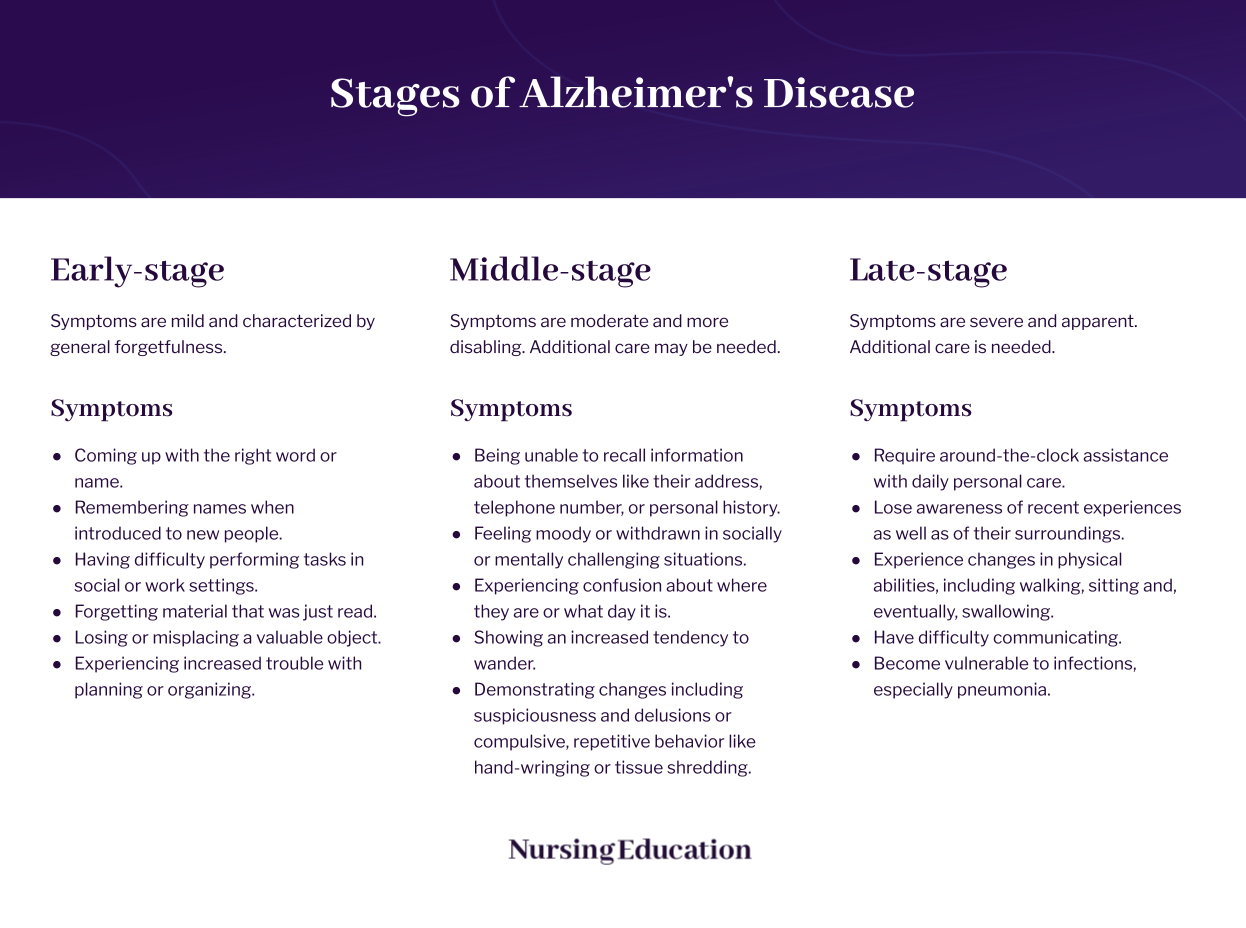
Early or mild stage: Your affected loved one may experience minor lapses in memory and find it challenging to learn new information. They may make poor decisions and not understand how their actions affect others.
Middle stage: In this stage, memory loss becomes more noticeable. The affected person may have trouble recognizing their family members. They may also show changes in their personality and behavior, like becoming suspicious or restless.
Late stage: Serious issues with memory and thinking are usually present in this stage. The affected person may struggle to communicate and require full-time care and support.
Nurse’s Tip: In the early stage of the disease, your loved one is likely very aware of their cognitive decline. Do your best to help them maintain their independence for as long as possible. Look for ways you can do things together rather than just doing everything for them. Find small strategies that let them live more autonomously while still ensuring safety.
Recognizing Behavioral Challenges in Alzheimer’s Patients
As Alzheimer’s disease advances, you’ll notice more changes in your loved one’s behavior, alongside memory loss. These changes can pose challenges for caregivers. Still, it’s important to remember that these behaviors are a result of the disease and not something the affected person can control.
The first step in handling these behavior changes is recognizing and understanding them. Once you know what they are, you can learn ways to manage them and take care of your loved one safely.
Common Behavioral Challenges in Alzheimer’s Patients
As a caregiver to a person with Alzheimer’s, you’re definitely not alone! Nearly half of all caregivers in the U.S. are helping someone with Alzheimer’s or another type of dementia. It’s okay to feel overwhelmed some days.
Here are some tips you can use. Still, know that there’s no one-size-fits-all guide, and every person’s experience with Alzheimer’s will be a little different, so it may take trial and error to find what works best.
Anxiety, Agitation, and Aggression
At times, people with Alzheimer’s may become anxious, agitated, and even aggressive. These are some of the most challenging behaviors you may face as a caregiver.
If they’re anxious or agitated, they may be restless, irritable, and unable to settle down. Agitation can lead to aggression, which might involve yelling, cursing, or lashing out physically.
What You Can Do to Manage Agitation and Aggression
Look for triggers: This can be tricky, but try to figure out what might have triggered the behavior. What happened right before your loved one became upset? Maybe a loud noise or being in a crowded room? For example, if noise causes your loved one to become agitated, create a calm, quiet space for them. This might involve turning off the TV or other devices. If you can identify the trigger, you can find ways to eliminate it and avoid it later.
Validate their emotions: Rather than trying to argue or reason with your loved one, focus on how they’re feeling. What they need in that moment is empathy. Speak calmly and reassure them. You might say something like, “You seem upset. You’re safe here, and I’ll be here with you until you start feeling better.”
Redirect attention: Shift your loved one’s attention by engaging them in another activity. For example, play their favorite music, go for a walk together, or enjoy a comforting snack. You can even try looking at old photos or talking about a happy memory.
Keep everyone safe: If your loved one becomes physically aggressive, give them space to calm down while making sure you are both safe. If a situation feels unsafe or you can’t de-escalate it alone, get help from others. Don’t hesitate to call 911 in emergencies and let the responders know that your loved one has dementia.
Nurse’s Tip: Sudden movements can startle you. For someone with Alzheimer’s, unexpected movements can feel just as frightening and lead to agitation or aggression. Approach them from the front, where they can see you clearly. Also, talk to their healthcare providers about medications that could trigger aggressive behavior. Sometimes, a small change in their treatment can make a big difference in managing aggression.
Depression
You may have heard that depression is common in people with Alzheimer’s disease. You may have even noticed signs such as isolation, social withdrawal, and loss of interest in hobbies in your loved one. This is especially true in the early and middle stages of Alzheimer’s, as the person may have trouble coping with the diagnosis. Knowing the signs and having some strategies in your toolkit can help comfort your loved one.
What You Can Do to Manage Depression
Get them involved in activities they love: Encourage your loved one to do things they enjoy, like getting creative with art or playing an instrument. Create a daily schedule that includes regular exercise (mornings are best!). Meaningful activities and physical exercise can help lift their mood and potentially reduce anxiety or sadness.
Show them love and support: Make sure your loved one knows just how much they mean to you. Remind them that you’re always there to offer a comforting hug or a listening ear.
Help them stay social: Spending time with friends and family is so important for people with Alzheimer’s. Encourage visitors to stop by, plan outings when you can, or think about joining a support group. Socializing can help your loved one feel less lonely and more connected.
Your loved one’s healthcare provider is a great resource! Don’t hesitate to contact them to discuss your concerns. Getting the correct diagnosis and treatment plan — which might include counseling, medication, or both — can make a difference in your loved one’s overall well-being and ability to function day-to-day.
Memory Loss and Confusion
Moments of forgetfulness and confusion can be incredibly frustrating for the person with Alzheimer’s disease and you as a caregiver. It’s difficult to watch your loved one having trouble recognizing family members, calling them by other names, or becoming confused and forgetting things they once knew well. Unfortunately, these changes are simply a result of how Alzheimer’s affects their brain.
What You Can Do to Manage Memory Loss and Confusion
Use memory aids: Labels, photos, and written reminders are helpful. For example, you might put a sign or a picture of a toilet on the bathroom door to help your loved one know which room it is, making it easier for them to find it when they need to use it. You can also use a whiteboard to write down the day’s schedule.
Meet them where they are: Their memory may seem stuck in the past or a particular period. It’s okay to meet them where they are and play along. Engage with them in conversations about that period. It’s their current reality, even if it’s not accurate.
Offer gentle corrections: If your loved one says something incorrectly, gently offer a suggestion rather than scolding them. For example, if they call an apple an orange, you could say, “It looks like an apple to me.”
Tips for Communicating With a Person With Alzheimer’s Disease
Look them in the eye and say their name when you start talking. It helps them focus on you.
Really listen to what they’re saying and be open to their feelings. Don’t brush them off or dismiss their concerns.
Give them plenty of time to answer.
If they don’t understand what you’re saying, try explaining it using different words.
Ask questions with Yes or No answers. For example, “Do you want to wear the red or blue shirt?” instead of “What do you want to wear?”
Speak softly, slowly, and clearly.
Maintain a calm, friendly, and reassuring tone.
Let them communicate however they can, even if it’s just through facial expressions or hand gestures.
Provide short, simple explanations. Avoid lengthy statements that might be overwhelming.
Be patient and understanding if the person struggles to find the right words or gets frustrated.
Offer gentle prompts or suggestions if they have difficulty expressing themselves, but avoid dominating the conversation.
Offer comfort and reassurance when needed, such as holding their hand or giving a gentle hug.
Nurse’s Tip: Put important phone numbers, like those for emergency contacts and family members, in a spot that’s easy to see, like on the fridge. That way, if they need to call for help or just want to chat with a familiar voice, the information is right at their fingertips.
Wandering
When someone with Alzheimer’s starts to forget familiar faces and places, they’re at risk of wandering or getting lost. Those who are restless, agitated, have wandered before, or talk about wanting to leave are also more likely to wander. Wandering can happen at any stage of the disease. Did you know that six out of every ten people with dementia will wander, and many do so more than once? As common as it is, wandering can be dangerous.
What You Can Do to Prevent Wandering
Create a daily routine: Plan structured, meaningful activities throughout the day to help reduce anxiety and restlessness. This can include things like reading, working on a puzzle, and doing household chores. Try to keep mealtimes, bedtimes, and activities around the same time each day.
Identify high-risk times: Take note of when your loved one is most likely to wander, such as during the evening. Plan engaging activities during these times to help keep them occupied and calm.
Meet their basic needs: Your loved one might wander because they’re hungry, thirsty, or need to use the bathroom but have forgotten where to go. Check that they are using the bathroom regularly, eating well, and staying hydrated. Consider limiting fluids a couple of hours before bedtime to reduce nighttime bathroom trips.
Use technology: If your loved one can still drive safely, think about using a GPS tracking device, such as Life360, in case they get lost. If they’re not driving anymore, take away their car keys. People with dementia might forget they can’t drive anymore.
Tips to Secure Your Home
Use safety gates to block off areas.
Place signs that say “STOP” or “CLOSED” on doors and windows to remind your loved one not to open them.
Paint doors the same color as walls or hang curtains over doors to camouflage the exits.
Install alarms that alert you when doors and windows are opened.
Never leave a loved one who has wandered before or is at risk of wandering alone or unattended.
Install smart devices like cameras, lights, and thermostats you can control remotely.
Voice-activated smart speakers, like Amazon’s Alexa and Apple’s Siri, can help manage home automation.
For more information about wandering and ways to keep your loved one safe, contact the Alzheimer’s Association 24/7 Helpline at 1-800-272-3900.
Planning for When Your Loved One Does Wander
Despite your best efforts, wandering is common among those with Alzheimer’s. And it’s natural to feel panicked and distressed when your loved one goes missing. To help you stay focused and act quickly in the moment, make an action plan to map out the steps you’ll take when it happens.
Create a wandering response plan:
Make a list of people to call for help, including local authorities, neighbors, and family members.
Have a recent photo of your loved one to share with helpers.
Know your loved one’s favorite places and where they may wander to
Notify others:
Inform your neighbors about your loved one’s condition and give them your contact information. Ask them to contact you immediately if they notice the person alone.
Consider registering your loved one with the local police or a wandering response service.
Use other tools:
Consider having the person with Alzheimer’s wear a medical alert bracelet at all times. You can get one from MedicAlert, online, or at your local pharmacy.
If using a GPS tracking device, know how to access it at all times.
Attach or sew labels to clothes to help identify them easily. These labels can have names or symbols to make it clear whose clothes they are.
Keep an unwashed piece of clothing, like a shirt, that your loved one has worn recently in a sealed plastic bag. If needed, search dogs can use the scent in the clothing to track down your loved one faster.
How to Find a Missing Alzheimer’s Patient
Every minute counts when a missing Alzheimer’s patient goes missing.
Start your search right away, focusing on the area near where they were last seen. Most wandering individuals are found within 1.5 miles of their starting point.
Check spots that could be attractive or dangerous to someone with dementia, like bodies of water, dense vegetation, or fenced areas.
If your loved one has previously wandered, search places where they’ve been to before first, as they may return to familiar locations.
If you haven’t found them after 15 minutes of looking, call 911 and file a missing person’s report. Let the authorities know about the Alzheimer’s diagnosis, as this will help them understand the urgency.
When you locate your loved one, speak calmly and use simple, familiar phrases to reassure them. Visual cues, like a favorite item of clothing or a cherished photo, can help them recognize you and feel more at ease.
Nurse’s Tip: Always make sure your loved one has some form of identification on them when they go out, like a wallet with an ID card and a cell phone with emergency contacts. Smartwatches with GPS tracking can also be a lifesaver if they wander off and get lost.
Sleep Issues and Sundowning
The evening hours can take on a feeling of dread for many Alzheimer’s caregivers. Suddenly, your once calm loved one becomes a completely different person. They’re confused, unable to sleep, disoriented, agitated, and restless. In some cases, they may even experience hallucinations or delusions. This is known as sundowning, and it’s another challenging aspect of the disease.
Mental and physical fatigue, new or confusing surroundings, and dim lighting that creates shadows are all factors that can contribute to sleep disturbances and sundowning in someone with Alzheimer’s disease.
Tips to Reduce Nighttime Restlessness and Sundowning
Keep things predictable: Make their days more predictable and less stressful by setting up a routine for waking up, eating, and sleeping at the same times every day.
Let the sunshine in: Make sure your loved one gets plenty of natural light during the day, whether that’s through walks outside or sitting near a sunny window. This can help their body better understand when it’s time to be awake and when it’s time to sleep.
Wind down in the evening: As the day comes to a close, try to create a peaceful atmosphere. Turn off the TV, dim the lights, and avoid any activities that might be too stimulating.
Create a soothing bedtime routine: Help your loved one relax before bed with calming activities they enjoy, like taking a warm bath or listening to gentle music.
Watch for triggers: Pay attention to when sundowning episodes happen and see if you can spot any common threads, like medications or situations that seem to trigger them. Keeping a journal can help you pinpoint patterns over time.
Avoid caffeine: It may be tempting to offer your loved one a comforting cup of coffee, tea, or a sweet piece of chocolate in the evening. But these likely contain caffeine and can interfere with their ability to fall asleep and stay asleep through the night. Instead, offer decaffeinated alternatives.
Use nightlights: Place nightlights in key areas of the home, such as the bedroom, hallway, and bathroom. They can help your loved one navigate more easily if they need to get up during the night.
If your loved one is up and agitated at night, help reorient them by gently letting them know what time it is, and everything’s okay. If they need to move around, stay with them and walk with them.
Nurse’s Tip: Caring for a loved one with Alzheimer’s is an incredibly demanding job, both emotionally and physically. Make sure you’re taking care of yourself, too.
When you’re feeling overwhelmed, take a break when it’s safe. Go for a walk, talk to a friend, or spend a few minutes alone to recharge. Staying calm and centered will help you better handle those challenging behaviors.
Imagine having a nagging pain or feeling hungry, thirsty, or tired but being unable to express it clearly. That’s often the case for people with Alzheimer’s. They might become agitated because they’re trying to communicate an unmet physical need.
Environmental Factors
For someone with Alzheimer’s, a noisy or unfamiliar space can be incredibly overwhelming and stressful. This can lead to agitation, confusion, and aggression.
Here are some common environmental triggers:
Moving to a new facility or a nursing home
Changes in their usual surroundings or their caregiver
Being admitted to the hospital
Communication Difficulties
Communication difficulties are another big factor. As Alzheimer’s progresses, it becomes difficult for individuals to express themselves and understand others. This is undoubtedly frustrating and can lead to outbursts or withdrawal.
Changes in the Brain due to Alzheimer’s
We can’t overlook the role of brain changes in behavioral symptoms. Alzheimer’s disease causes progressive damage to brain cells, which can profoundly impact cognition, emotions, and behavior.
Non-Medical Interventions for Behavioral Challenges
While medical treatments play a role, non-medical approaches focus on supporting the whole person.
Therapeutic Activities for Alzheimer’s Patients
A good place to start is with activities your loved one enjoys. Engaging your loved one in meaningful, enjoyable activities can help keep their mind active while providing social interaction and a sense of purpose. This might include art or music therapy, reminiscence activities that tap into long-term memories, or pet therapy.
Role of Nutrition and Hydration in Behavior Management
What your loved one eats and drinks is also important for managing behavior. A balanced diet with plenty of nutrients can support brain health and improve mood, while dehydration can lead to confusion and fatigue, potentially causing behavioral challenges.
Nurse’s Tip: Keep tasty, healthy snacks visible around the house as reminders to eat. Set reminders to offer drinks regularly to promote hydration. If decreased appetite arises, try modifying food textures or adding nutritional supplement drinks, like Ensure or Boost, to ensure they get the nourishment they need.
Benefits of a Consistent Routine
For someone with Alzheimer’s, having a predictable schedule can create a sense of comfort and security, which can help reduce anxiety and agitation. As a caregiver, you play a significant role in establishing and maintaining these routines to help your loved one feel more stable and grounded.
Importance of Physical Exercise and Rest
Schedule a walk in a safe space outdoors or encourage gentle chair exercises to improve mobility, boost mood, and better sleep. Creating a relaxing bedtime routine and a comfortable sleep environment can also help minimize nighttime confusion and restlessness.
Nurse’s Tip: Encourage rest, but be mindful that excessive napping can make it harder for your loved one with Alzheimer’s to sleep well at night. It’s best to limit naps to keep a more consistent sleep schedule.
Medical Interventions for Behavioral Challenges
Sometimes, non-medical approaches alone aren’t enough. While Alzheimer’s doesn’t have a cure, medications can help slow the disease and manage the symptoms. If your loved one is experiencing severe behavioral symptoms or is at risk of harming themselves or others, medications may be an appropriate next step.
Use of Medication to Control Behavioral Symptoms
The healthcare provider will generally begin with a low dose of the medication and adjust as needed. Starting with a low dose allows you to closely monitor for any side effects or adverse reactions. Make sure to stay in close contact with your loved one’s healthcare provider during this process, as they can help you decide if and when to adjust the dosage based on how your loved one is responding.
Potential Side Effects and Risks of Medication
Every medication has pros and cons, and what works for one person may not be the best choice for another. Talk to your healthcare provider about the potential benefits and risks.
Side effects can be serious, and in some cases, medications can even worsen the very symptoms they’re meant to treat. Be vigilant and report any concerning changes to your loved one’s healthcare provider right away.
The tips we covered can provide so much value, but only if you have them on hand when needed. Before you go, bookmark this article as a reference you can easily return to when new situations arise with your loved one’s care. Think about other caregivers who could use this resource, and pay it forward by sharing it with them.
FAQs
What are some common early signs and symptoms of Alzheimer’s disease?
Common early signs of Alzheimer’s include memory loss, like forgetting important dates or events, and challenges in solving problems or completing familiar tasks. You might also notice changes in mood or personality, such as increased anxiety, suspicion, or withdrawal from social situations.
How can caregivers effectively manage behavioral challenges in Alzheimer’s patients at home?
Start by identifying and addressing any underlying causes, such as pain, hunger, or overstimulation. Create a calm, structured environment with a consistent daily routine, and engage your loved one in meaningful activities that match their interests and abilities. If challenging behaviors persist, contact their healthcare provider for additional strategies, including potential medication options.
When should caregivers consider seeking medical intervention for behavioral symptoms in Alzheimer’s patients?
If non-medical approaches aren’t providing enough relief and your loved one with Alzheimer’s is experiencing severe behavioral symptoms that are putting them or others at risk, it’s time to talk to their healthcare provider about medical interventions. Medications can be helpful in managing specific symptoms, but they should be used carefully and in combination with other non-medical strategies.
Additional Support and Resources for Alzheimer’s Care
NursingEducation strives to provide information that is up-to-date and unbiased. By engaging professionals from multiple healthcare perspectives, we ensure our content contains accurate information that helps our readers.
We have combined decades of experience teaching, publishing research, and working with patients in all fields of medicine to create accurate and straightforward online education. Once written, each article undergoes a rigorous peer-review process to bring you the highest quality, most comprehensive content possible.
Our writers receive feedback from reviewers to clarify content, prevent misleading statements, and identify areas that would benefit from more information. Our subject matter experts and reviewers generally work full-time in their professions and work for NursingEducation part-time.